TRUCK BEDS
How to Measure a Truck Bed: Length & Width
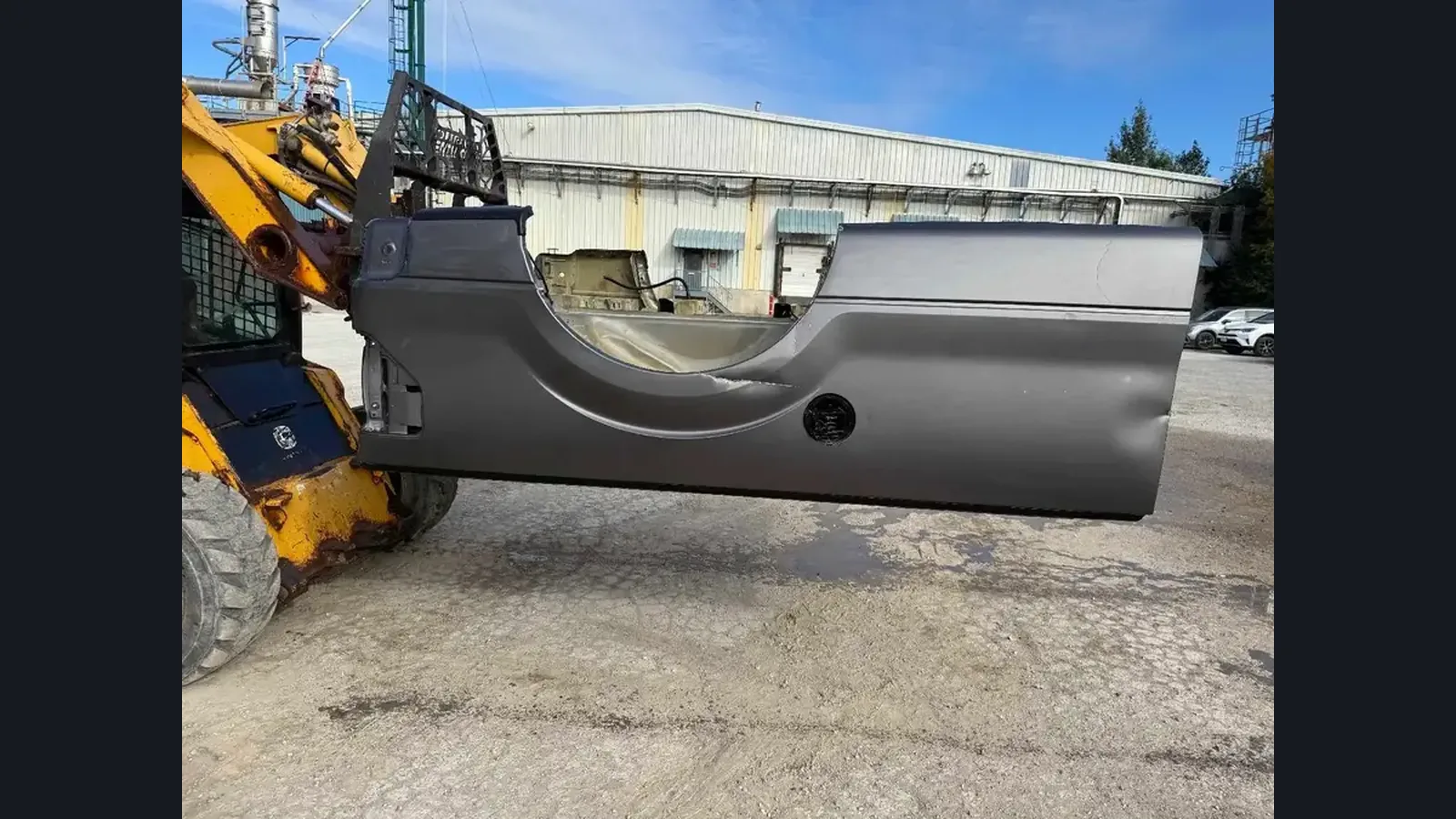
Measure bed length along the floor from the inside of the bulkhead, the wall behind the cab, to the inside of the closed tailgate. Then take two widths: one between the wheel wells and one from wall to wall. Those three numbers tell you what a bed holds and whether a replacement will line up with your truck.
What do you need before you start?
A steel tape that locks, a second person if the bed is dirty or the tape wants to sag, and a closed tailgate. That is all. Take a phone photo of every reading with the tape in frame so you can check it later.
Pull out a drop-in liner or mat first if you can. A liner takes up room on every wall and will pull your width down by an inch or more. If you are measuring for a tonneau cover or a tool box, though, measure with the liner in, because that is the space you actually have.
How do you measure bed length?
Hook the tape on the bottom of the bulkhead where it meets the floor. Run it straight back along the floor to the inside of the closed tailgate and read the number. Keep the tape on the floor, not up on the rails. Bulkheads and tailgates are rarely perfectly vertical, so the top of the bed can read longer or shorter than the bottom by a few tenths of an inch.
Write down both the floor reading and the rail-top reading if you are buying a cover. A bed cover cares about the top, a load of lumber cares about the bottom.
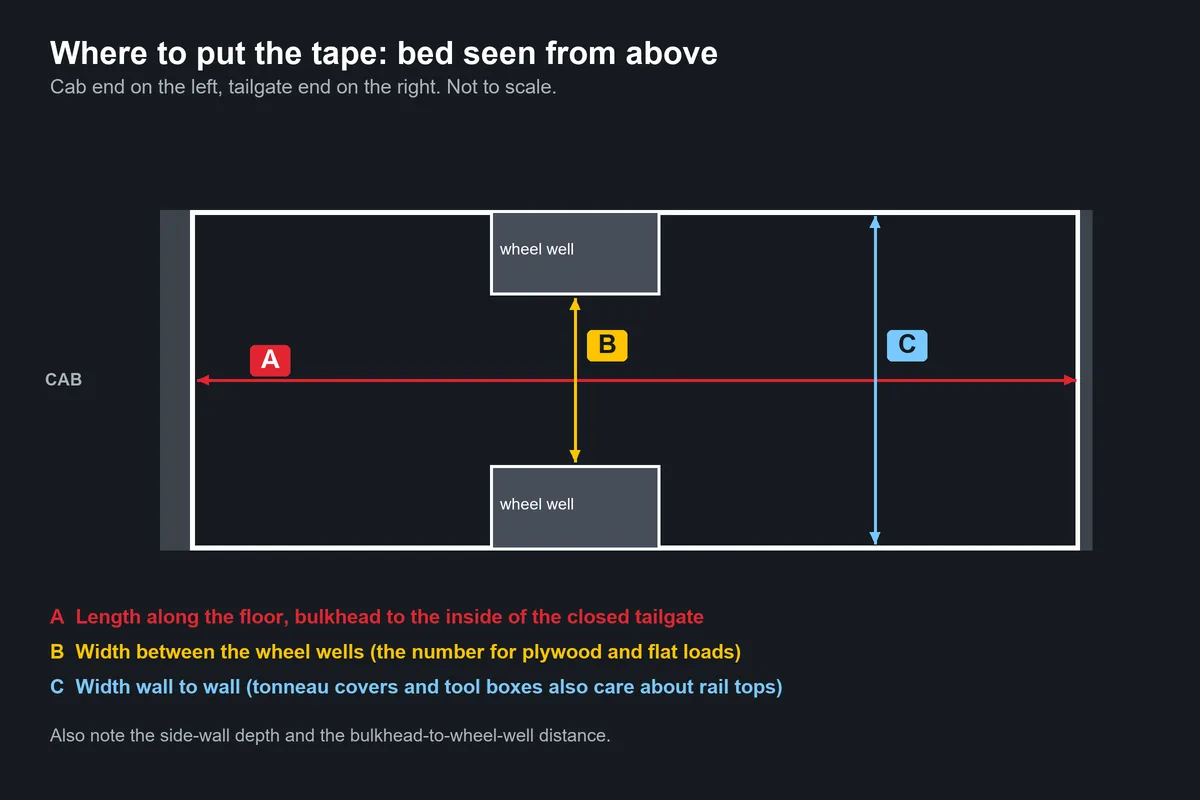 The three readings that matter most. Letters match the steps in this guide.
How do you measure bed width and depth?
Width has two answers, and people mix them up constantly.
Between the wheel wells (B). Measure from the inner face of one wheel-well hump to the other, at the narrowest point. This is the number for plywood, a pallet or anything that has to lie flat on the floor. Round down.
Wall to wall (C). Measure from the inside of one side wall to the inside of the other, at the top of the bed and again near the floor. Walls usually slope a little, so the two numbers can differ. Covers and rail-mounted boxes sit on the top, so use the top reading.
For depth, measure from the floor to the top of the rail, then again to the underside of the rail cap if you are fitting a cover with clamps. Newer beds have deeper walls than older ones, and that matters for how high you have to lift a load.
Two more numbers are worth a minute: the distance from the bulkhead to the front of the wheel well, and the distance from the tailgate to the back of the wheel well. These decide whether a tool box or a dirt bike fits ahead of the wells.
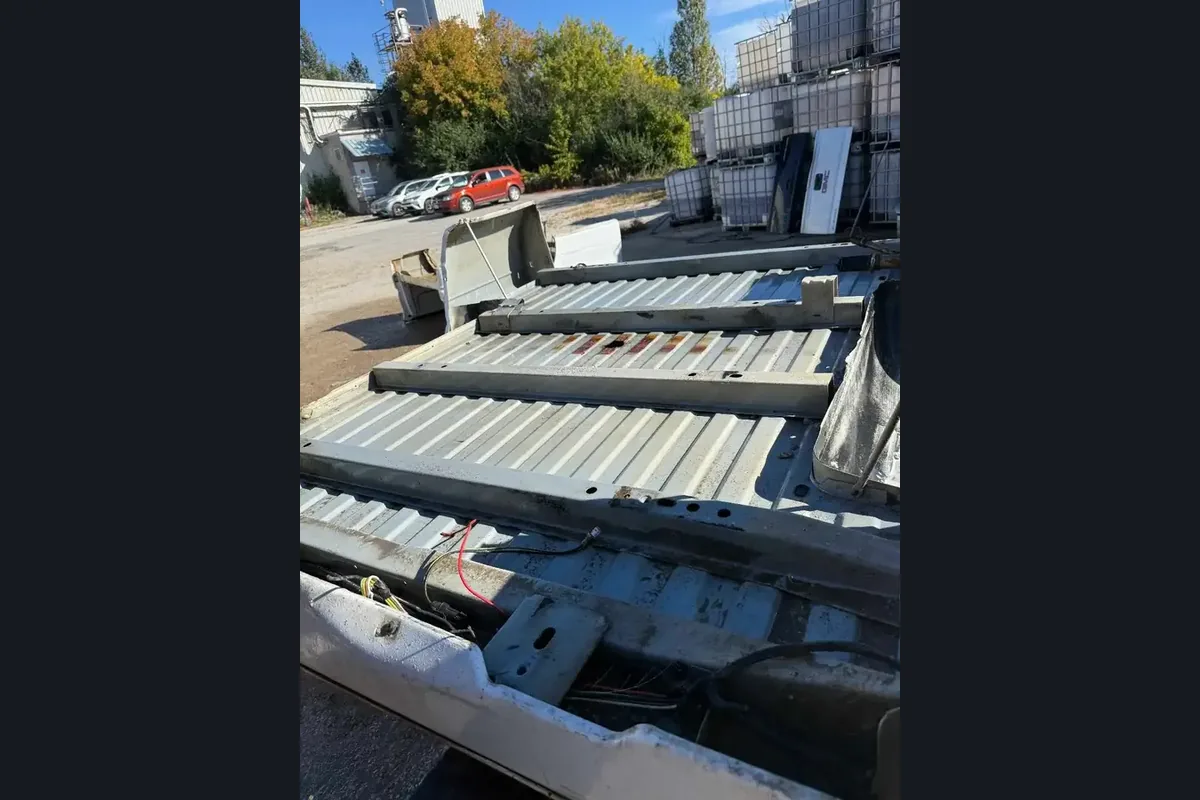 On a loose bed the floor ribs and the gap between the wheel wells are easy to see from the tailgate end.
What are the common truck bed lengths?
Bed lengths come in three classes on full-size pickups. The figures below are approximate and are rounded from published specs, so treat them as a sanity check on your own tape, not a catalog.
| Truck | Short | Standard | Long |
|---|---|---|---|
| Ford F-150 | 5.5 ft (about 67 in) | 6.5 ft (about 78 to 79 in) | 8 ft (about 97 to 98 in) |
| Chevrolet Silverado 1500 / GMC Sierra 1500 | 5.8 ft (about 70 in) | 6.6 ft (about 79 in) | 8 ft (about 98 in) |
| Ram 1500 | 5.7 ft (about 67 in) | 6.4 ft (about 76 in) | 8 ft (about 96 to 98 in) |
| Heavy-duty Ford, Chevrolet, GMC, Ram | about 6.5 to 6.9 ft on trucks that offer it | n/a | about 8 ft |
| Toyota Tundra | about 5.5 ft | about 6.5 ft | about 8 ft on some years |
Two cautions. First, years matter: bed dimensions moved between generations, and a 2005 and a 2015 truck of the same make will not share a table row. Second, listings often write lengths loosely, as 6’6”, 6.5 ft or 6.6 ft, and mean the same bed. If your tape says 77 inches, you almost certainly have a standard bed, whatever the label says.
Can you measure a loose bed the same way?
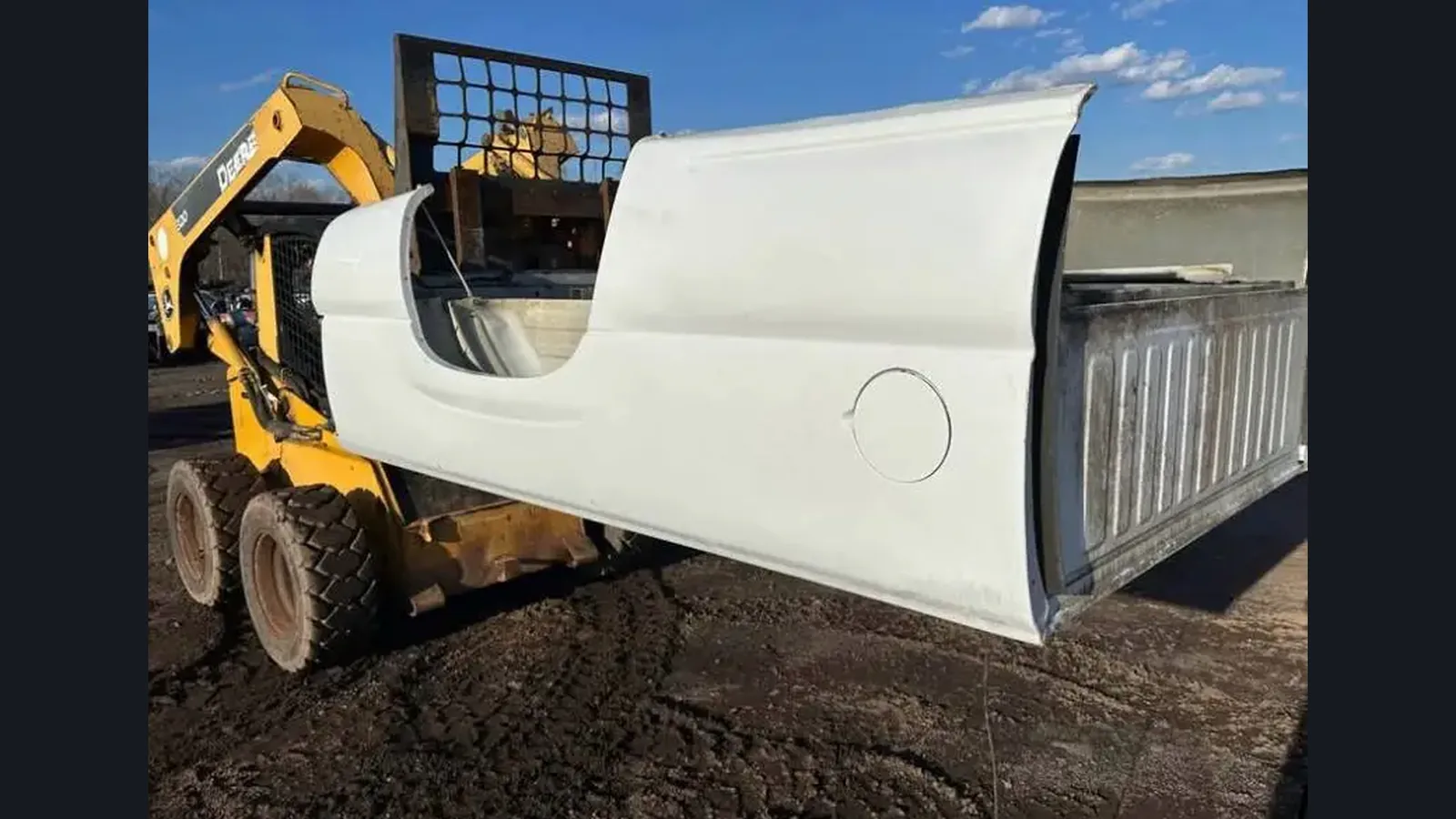
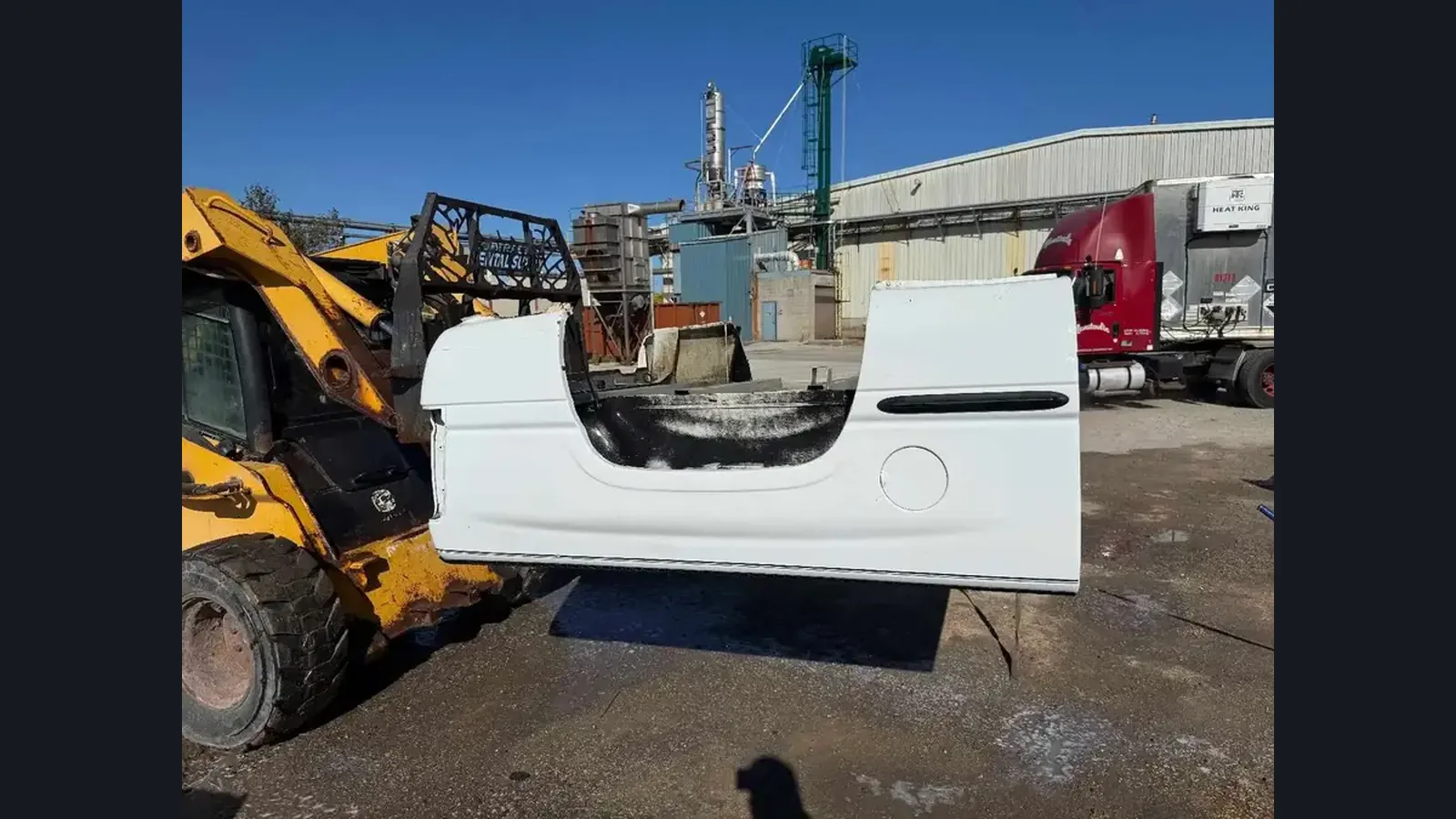
Yes, and it is easier. A bed lying on a stand or held on a forklift has no cab in the way, so you can reach the bulkhead and the tailgate end directly. Use the same three readings, and take the length from the inside of the bulkhead to the inside of the closed tailgate. If you are checking a bed before buying, ask for the same figures, and ask for a photo of the tape on the floor if the listing does not state a length.
What mistakes make a measurement useless?
- Measuring on the outside of the bed. Spec sheets use the inside.
- Letting the tape curve around a wheel well. Pull it straight.
- Measuring with a liner in when you want the bare-bed number, or the reverse.
- Reading width at the rail cap only. A bed can be wide on top and tight at the wells.
- Forgetting the tailgate. Length is to the inside of a closed gate, not to the end of the floor.
How do you use the numbers to shop for a bed?
Start with your truck, not the bed. A bed has to match the wheelbase and frame it sits on, and that is why a short bed and a long bed on the same cab are really different trucks. Your length measurement should land in the right class for your model, and a mismatch is the first sign that something has been swapped on your truck before.
Once you have the numbers, look through the truck beds in our inventory or go straight to your make: Ford, Chevrolet, GMC or Ram. Send us the item code, your VIN and your three readings. We check fitment personally before payment, so a close call gets caught before it becomes a freight bill. For the bigger picture of how that check works, see how to read our listing photos and item codes.
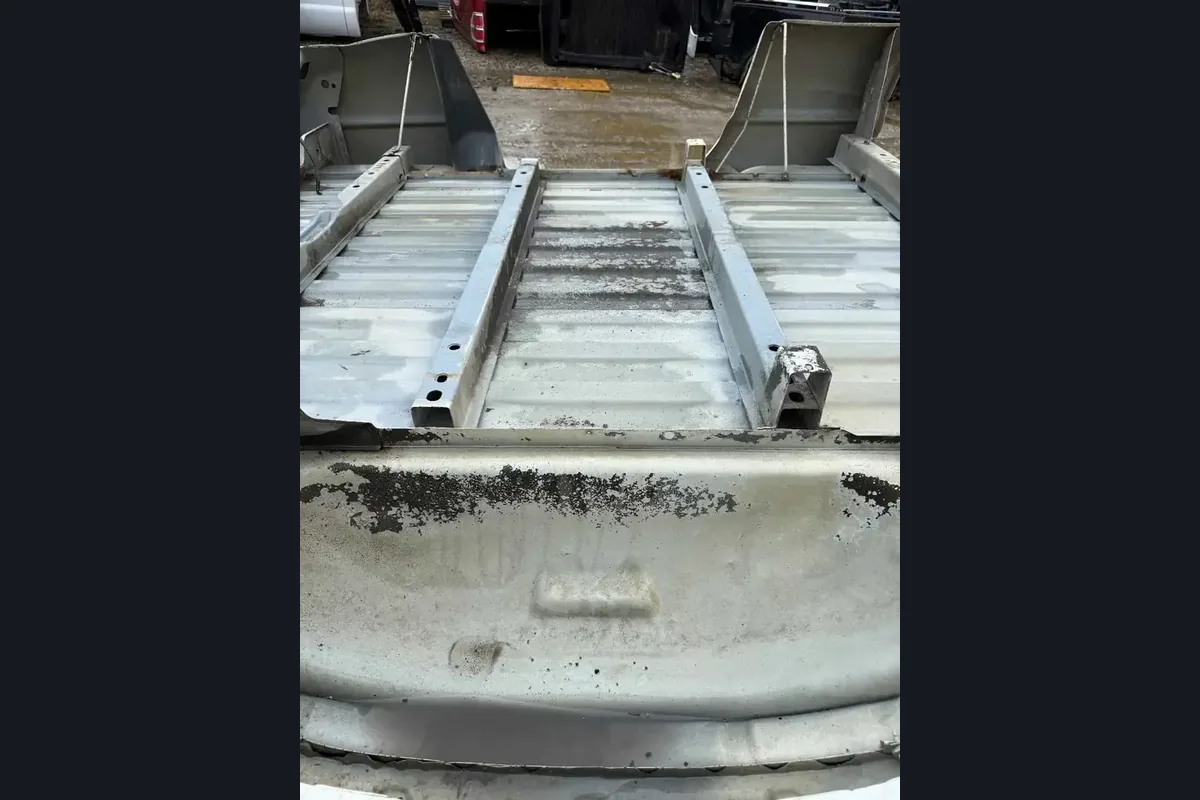 Floor close-ups also show the underframe channels you will be comparing against your own truck.
Frequently asked questions
Do I measure a truck bed from the inside or the outside?
Inside. Length runs from the inside face of the bulkhead (the wall behind the cab) to the inside face of the closed tailgate. Width is taken between the inside faces of the side walls. Outside measurements include the rail caps and thickness of the metal, so they will not match a spec sheet.
Why does my measured bed length not match the advertised length?
Advertised lengths are rounded and sometimes measured at a different height. A bed sold as 6.5 ft can come in a few inches either side. Measure at floor level and compare your number against the actual length range for your truck, not the round marketing figure.
Do I need the width between the wheel wells?
Yes if you carry flat sheet goods, a pallet or a slide-in camper. The wheel wells are the narrowest point of the bed. Tonneau covers and tool boxes care more about the width from wall to wall at the top of the rails.
Can I just send you my VIN instead of measuring?
A VIN is the better starting point, and we use it for the fitment check. Measuring still helps when your bed has been swapped or modified, because the VIN describes the truck as built, not as it sits today.
NEXT STEP
Find the right bed for your truck.
Browse listings with real photos, or call or text us with the item code. We confirm fitment and quote freight to your address before you pay.
 BEDFORGE support